What is Hijama & Cupping?
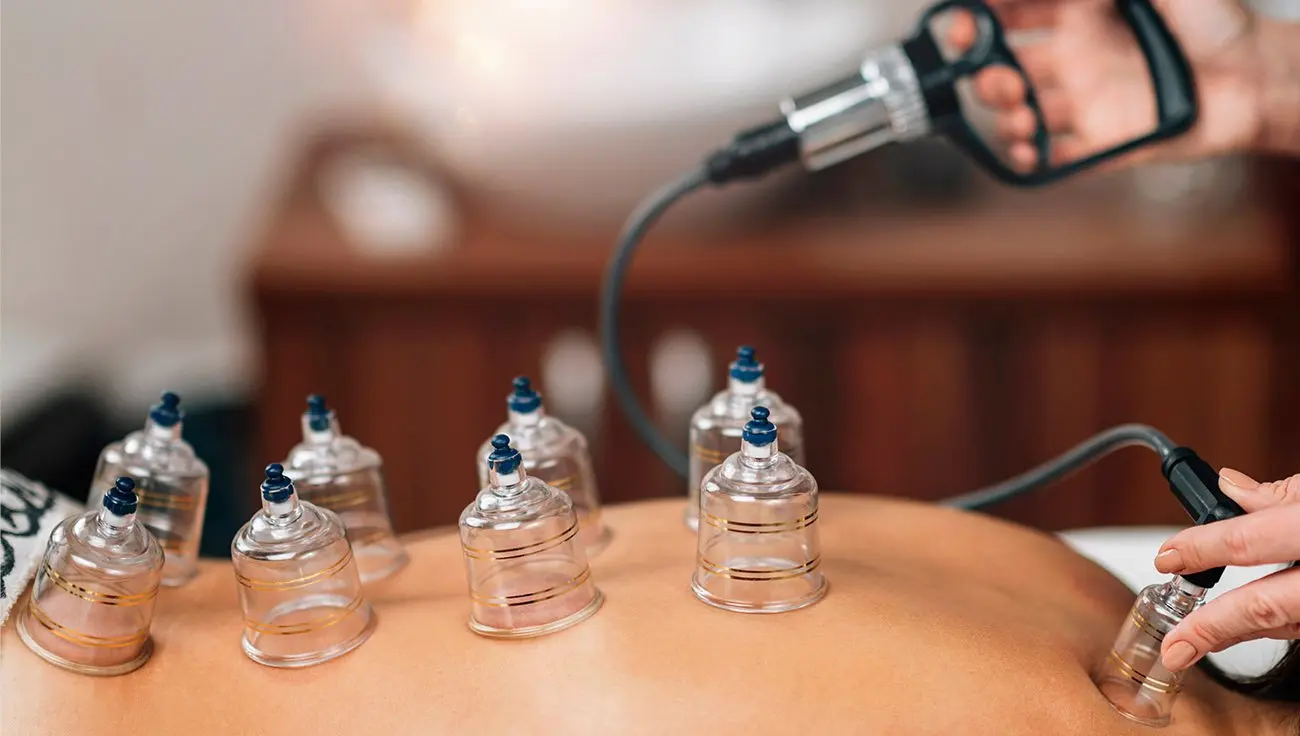
Cupping therapy is a traditional practice in which glass or silicone cups are placed on the skin and a vacuum (negative pressure) is created inside them. Its origins go back to Egyptian, Chinese and Middle Eastern medical traditions.
There are two main types: in dry cupping only a vacuum is applied, without cutting the skin. In hijama, also known as wet cupping, very fine superficial incisions are made after the vacuum and a small amount of blood is drawn.
Hijama and cupping therapy fall under the Turkish Ministry of Health’s Regulation on Traditional and Complementary Medicine Practices and may only be performed by certified physicians under hygienic conditions.
How does it work?
The vacuum increases blood flow in the treated area and stretches the connective tissue. It is thought that this may reduce muscle tension and support local circulation.
In hijama, stimulating local circulation is combined with superficial blood drawing. The exact mechanism is still being researched; the method is used to support, not replace, medical treatment.
When is it used?
- Muscle tension and pain in the neck, upper and lower back
- Tension-type headaches
- Muscle fatigue after sport
- General relaxation and stress-related tension
How is it done?
- 1First consultation and selection of suitable areas.
- 2Cleansing the skin and placing the cups.
- 3Vacuum in dry cupping; a small amount of blood drawn through superficial incisions in hijama.
- 4Cleansing the area and aftercare advice.
- Eat a light meal 2–3 hours before your session; do not come completely hungry or very full.
- Always mention any medication you take for blood thinning or anaemia.
- For hijama, your blood values (especially haemoglobin) may be checked beforehand.
- The area is cleaned and the cups are placed.
- In dry cupping, the cups are left in place for 5–10 minutes.
- In hijama, after the cup is removed, superficial incisions are made with a single-use blade and the cup is replaced to draw a small amount of blood.
- The area is cleaned and dressed if necessary.
- Round redness and bruising that fade within 3–7 days are normal at the cup sites.
- After hijama, keep the area dry for 24 hours and avoid strenuous exercise.
- Drink plenty of water and rest that day.
Possible side effects
- Temporary redness, bruising and tenderness
- Light scabbing at incision sites after hijama
- Occasionally dizziness or feeling faint (especially if you come on an empty stomach)
- Very rarely skin infection
Who is it not suitable for?
- Anaemia or bleeding disorders
- Use of blood-thinning medication
- Pregnancy
- Wounds or skin infection at the treatment site
Sources
- Republic of Türkiye Ministry of Health. Regulation on Traditional and Complementary Medicine Practices. Official Gazette, 27 October 2014, No. 29158.
- Aboushanab TS, AlSanad S. Cupping therapy: an overview from a modern medicine perspective. J Acupunct Meridian Stud. 2018;11(3):83–87.