What is Acupuncture?
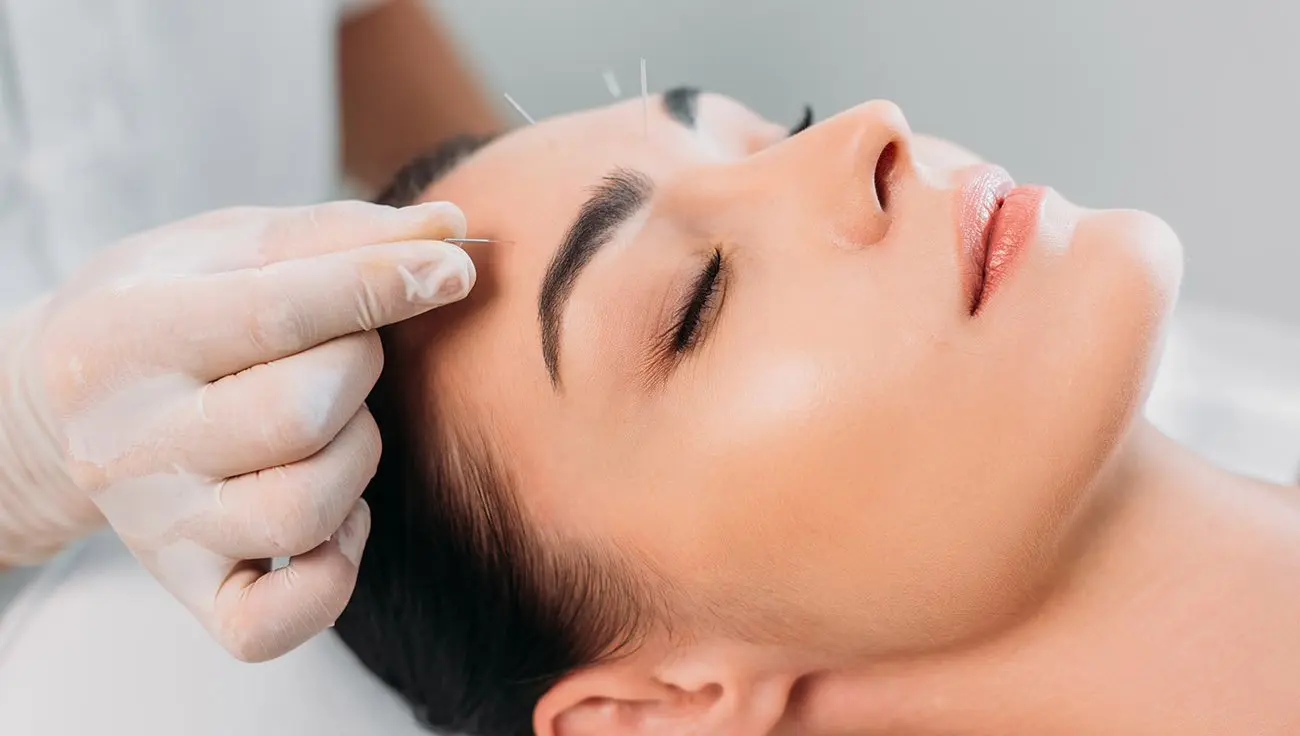
Acupuncture is based on thousands of years of Chinese medicine and is recognised today by the World Health Organization as a complementary method. Hair-thin, single-use, sterile needles are placed at specific points on the body to activate the body’s own regulatory mechanisms.
In Türkiye, acupuncture is covered by the Ministry of Health’s Regulation on Traditional and Complementary Medicine Practices and may only be performed by physicians certified in this field.
Dr. Güzin Güntekin completed her acupuncture training at Yeditepe University Faculty of Medicine in 2013, and advanced techniques such as fertility and cosmetic acupuncture at the Beijing International Acupuncture Training Center.
How does it work?
In the traditional approach, acupuncture points are associated with balancing the body’s flow of energy (Qi). Modern research shows that needling stimulates nerve endings and can increase the release of substances such as endorphins and serotonin that regulate pain and mood, and can affect local blood flow and muscle tension.
This is why acupuncture is used as a supportive treatment especially in pain management, stress-related complaints and some functional disorders.
When is it used?
- Chronic musculoskeletal pain such as lower back, neck, knee and shoulder pain
- Migraine and tension-type headaches
- Allergic rhinitis (hay fever)
- Stress, anxiety and sleep problems
- Support for weight management and appetite control
- Support during smoking cessation
- Support for fertility treatment (preparation for pregnancy)
- Cosmetic acupuncture (facial skin vitality)
How is it done?
- 1Your complaints and medical history are assessed at a first consultation.
- 2Acupuncture points specific to you are selected.
- 3Single-use sterile needles are inserted and left in place for a while.
- 4The needles are removed at the end of the session; you can return to daily life straight away.
- Do not come on an empty stomach; having eaten a light meal reduces the risk of dizziness.
- Wear comfortable, loose clothing.
- Tell us about any medication you take (especially blood thinners) and any chronic conditions.
- Always mention if you might be pregnant.
- You lie in a comfortable position and the points are cleaned.
- As the needles are inserted, most people feel a slight tingling, heaviness or warmth.
- The needles stay in place for about 20–30 minutes while you rest.
- You can return to daily life straight away.
- Avoiding strenuous exercise and alcohol on the day of the session is recommended.
- Drink plenty of water; some people feel slightly tired or deeply relaxed after a session.
Possible side effects
- Small bruises or pinpoint bleeding at needle sites
- Temporary dizziness or tiredness
- Very rarely local infection (the risk is minimised with single-use sterile needles)
Who is it not suitable for?
- Bleeding disorders or use of blood-thinning medication
- Active infection at the treatment site
- Certain points during pregnancy (after medical assessment)
Sources
- Republic of Türkiye Ministry of Health. Regulation on Traditional and Complementary Medicine Practices. Official Gazette, 27 October 2014, No. 29158.
- World Health Organization. Acupuncture: Review and Analysis of Reports on Controlled Clinical Trials. Geneva: WHO; 2003.
- Vickers AJ, et al. Acupuncture for chronic pain: individual patient data meta-analysis. Arch Intern Med. 2012;172(19):1444–1453.